The Power of Social Media Marketing & How to Maximize Your Impact
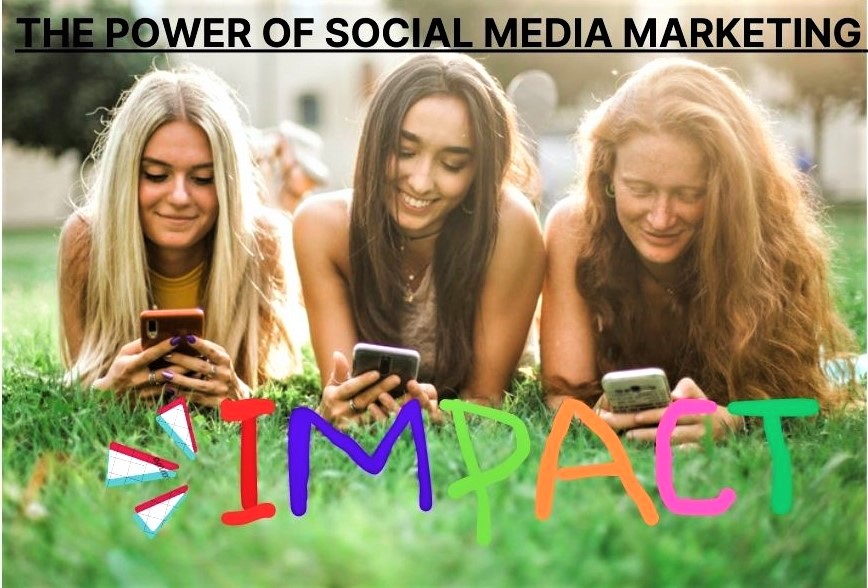
The Power
of Social Media Marketing & How to Maximize Your Impact:
Social media marketing has completely transformed the way
businesses connect with their customers and promote their products or services.
With a staggering 4.2 billion active social media users worldwide, social media
has become an indispensable tool for businesses of all sizes to engage with
their target audience and raise brand awareness. In this article, we will delve
into the immense power of social media marketing and explore how businesses can
optimize their impact on these platforms.
Why Social Media
Marketing Matters:
Social media marketing empowers businesses to reach a vast
and diverse audience, interact with customers directly, and forge strong
relationships with their followers. Platforms like Facebook, Instagram,
Twitter, and LinkedIn boast millions of active users who are constantly
engaging with the content. By creating captivating posts and utilizing the
algorithms employed by social media platforms, businesses can effectively reach
their intended audience and drive traffic to their websites or online stores.
Social media marketing also offers businesses an opportunity
to enhance brand visibility and position themselves as industry authorities. By
consistently delivering valuable and engaging content, businesses can increase
their online presence and cultivate a loyal following.
Moreover, social media marketing provides the advantage of
targeting specific demographics. Social media platforms accumulate a wealth of
user data, encompassing factors such as age, gender, location, interests, and
more. This data can be leveraged to create targeted advertising campaigns
tailored to specific audience segments. By reaching the right people with the
right message, businesses can boost their conversion rates and maximize their
return on investment.
.jpg)
Maximizing Your
Impact on Social Media
To maximize their impact on SMM panel social, media marketing, businesses must
develop a comprehensive social media marketing strategy that aligns with their
overall marketing goals. Here are some steps to follow when crafting a social
media marketing plan:
1. Define your target audience: Before engaging with your
audience effectively on social media, it is vital to define who they are.
Consider factors such as age, gender, location, interests, and purchasing
habits to create a clear profile of your target audience.
2. Choose the right social media platforms: Not also all social
media platforms are created equal. Select the platforms most relevant to your
target audience and align with your marketing objectives.
3. Create engaging content: The key to success on social media
lies in crafting engaging content that resonates with your audience. Utilize a
combination of text, images, and videos to captivate and maintain the interest
of your followers.
4. Monitor your metrics: To gauge the success of your social
media marketing efforts, track essential metrics such as reach, engagement, and
conversion rates. This data can be used to refine your social media strategy
and optimize it for maximum impact.
5. Stay up to date with social media trends: Social media
platforms are constantly evolving, and businesses must stay abreast of the
latest trends and algorithms to remain relevant. By staying ahead of the curve,
businesses can maximize their impact on social media and outpace their
competitors.
In addition to these steps, businesses can harness the
influence of social media influencers to expand their reach and engagement.
Influencers possess a substantial and engaged following within specific niches,
and by partnering with them, businesses can amplify brand awareness and foster
trust among their customers. However, it is crucial for businesses to select
influencers carefully and ensure their alignment with brand values and
messaging. Furthermore, businesses must transparently disclose influencer
partnerships to maintain authenticity and transparency.
The Future of Social
Media Marketing
As SMM pane, social media continues to evolve, businesses must remain proactive and adapt their marketing strategies accordingly. Here are some trends to keep an eye on in the future of social media marketing:
1. Video content: Video content is experiencing a surge in
popularity on social media platforms, with users engaging more with videos than
any other form of content. Businesses must prioritize video content creation to
remain relevant.
2. Augmented reality (AR): refers to the technology that also
overlays virtual elements, such as digital images, graphics or information onto
the real world environment. It enhances the user's perception of reality by
blending virtual and physical elements in real time. Unlike virtual reality
(VR), which immerses users in a completely simulated environment, AR enhances
the existing reality by adding virtual elements to it.AR is typically
experienced through all the devices such as smartphones, tablets, smart glasses
and headsets that have built in cameras and sensors. These devices capture the
real-world environment and overlay virtual elements onto the users view,
providing an interactive and immersive experience. AR technology uses computer
vision, object recognition, and tracking algorithms to precisely map and align
virtual objects with the real-world environment.
AR application: AR has various
applications across different industries and sectors. In entertainment AR is
used in gaming to also create interactive and immersive experiences where
virtual objects can be placed and interacted with in the real world. It is also
used in marketing and advertising to engage consumers with interactive
campaigns, allowing them to visualize products or experience virtual try-ons.
In education, AR is used to enhance learning by providing
interactive and engaging content, such as 3D models and simulations, overlaid
onto textbooks or real objects. AR is also utilized in architecture and design
to visualize and showcase virtual representations of buildings, interiors, or
products in real-world contexts.
AR has found applications in fields like healthcare, where
it can assist in medical training, surgical planning, and patient education. It
can provide surgeons with real-time guidance and visualizations during complex
procedures. In retail, AR is used to create virtual showrooms or fitting rooms,
enabling customers to try on virtual products or see how furniture would look
in their homes.
The future potential of AR is vast, with ongoing advancements
in hardware and software. Also AR technology continues to evolve, and we can
expect to see further integration of AR into everyday life and also providing
enhanced experiences and transforming various industries.
All rights reserved 2023 for HeadSMM.
